B2B vs. B2C: Understanding the Key Differences
In the world of commerce, businesses can operate in two primary models: Business-to-Business (B2B) and Business-to-Consumer (B2C). Both models have distinct characteristics, target audiences, and marketing strategies. Understanding the differences between B2B and B2C is crucial for businesses aiming to optimize their approach and achieve success in their respective markets.
What is B2B?
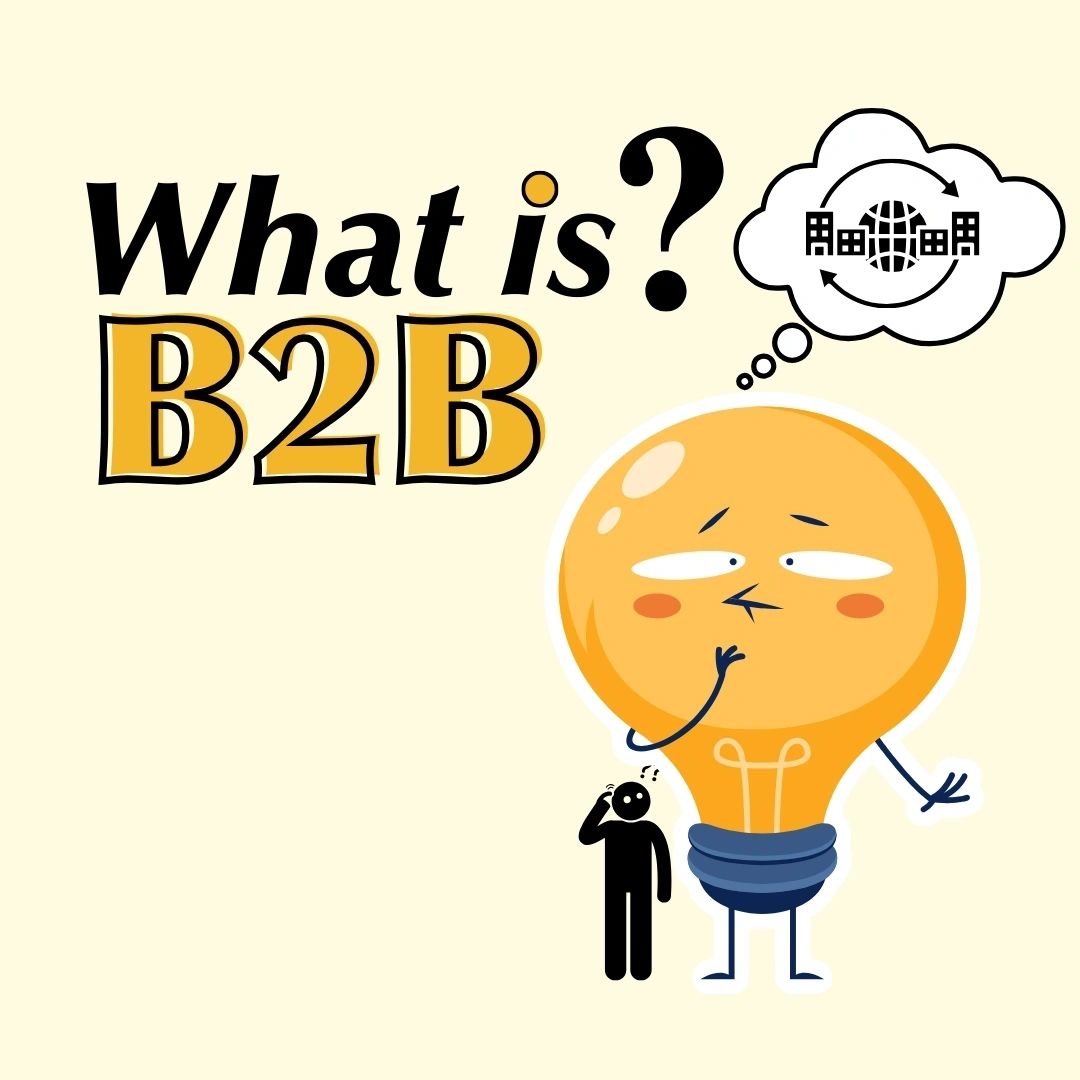
B2B refers to transactions conducted between one business and another. In this model, products or services are sold from one company to another, often in bulk. Examples of B2B companies include wholesalers, manufacturers, and service providers that cater specifically to other businesses.
The B2B market is typically characterized by longer sales cycles, higher transaction values, and a smaller number of clients compared to B2C. B2B transactions often involve complex decision-making processes, as purchases are made by multiple stakeholders within a company. For example, when a business decides to invest in new software, the decision may involve input from the IT department, finance team, and upper management.
What is B2C?
B2C, or Business-to-Consumer, refers to transactions that take place between a business and individual consumers. In this model, companies directly sell products or services to end-users. Retail stores, e-commerce websites, and subscription services are common examples of B2C businesses.
The B2C market tends to have shorter sales cycles, as individual consumers make quicker purchasing decisions than businesses. Marketing efforts in B2C often focus on emotional appeal and brand identity to engage customers and drive sales. Companies in this space use various channels, including social media, email marketing, and advertising, to reach their target audiences.
Key Differences Between B2B and B2C
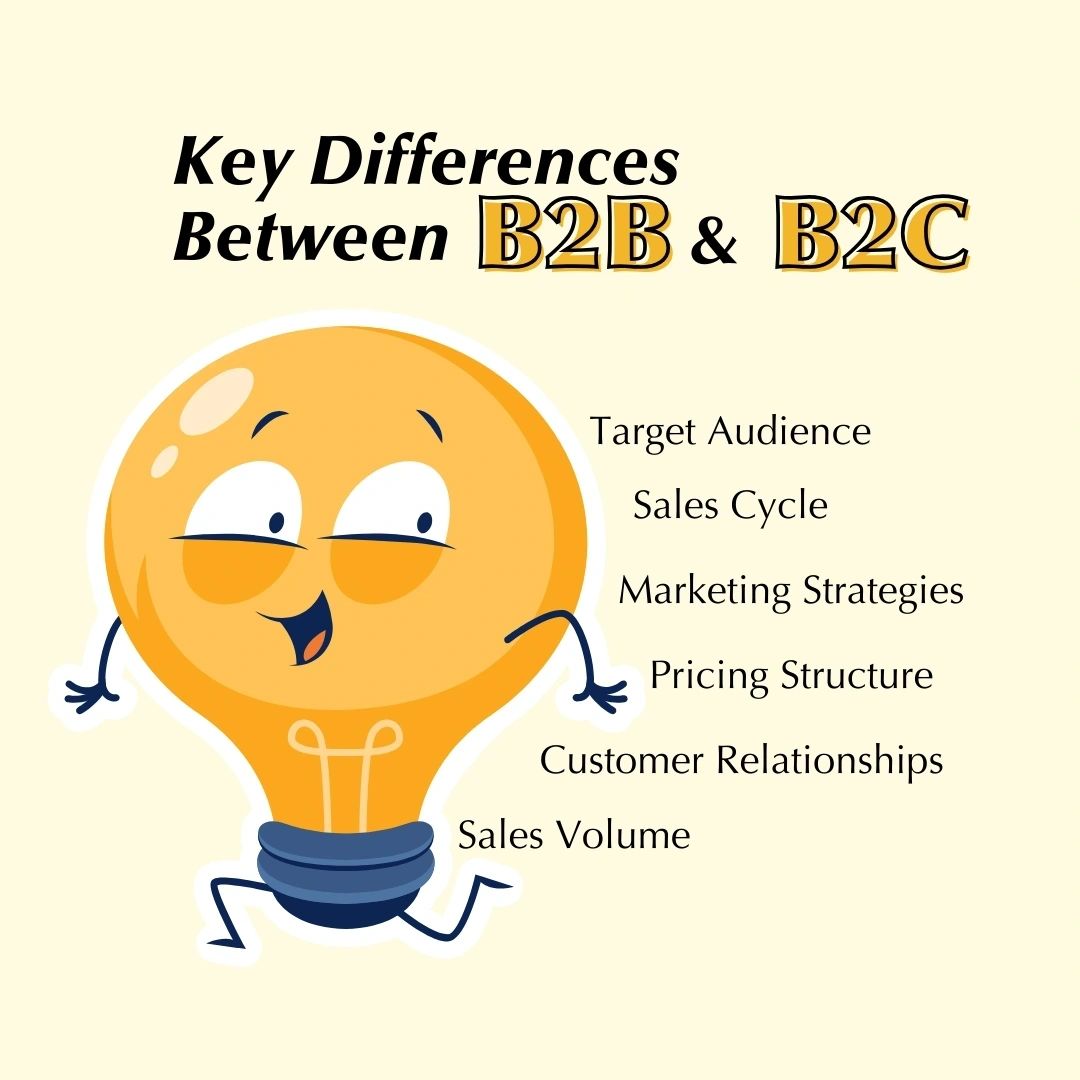
1. Target Audience:
• B2B focuses on other businesses, emphasizing relationship-building and a deep understanding of each client’s specific needs. The emphasis is on creating long-term partnerships that can yield mutual benefits.
• B2C focuses on individual consumers, aiming to attract a larger audience with diverse interests and preferences. Marketing strategies are designed to appeal to emotions and immediate desires.
2. Sales Cycle:
• B2B typically has a longer sales cycle due to the complexity of the products or services involved and the number of stakeholders in the decision-making process. B2B sales often require multiple meetings, presentations, and negotiations.
• B2C generally involves a shorter sales cycle because consumers frequently make spontaneous decisions based on their personal preferences. E-commerce platforms streamline this process, enabling consumers to complete purchases with just a few clicks.
3. Marketing Strategies:
• B2B marketing strategies often include content marketing, email campaigns, webinars, and personalized outreach. The focus is on providing valuable information and building credibility to foster trust among potential clients.
• B2C marketing strategies often focus on branding, engaging with customers on social media, and utilizing advertising. Techniques like influencer marketing, promotions, and emotional storytelling are commonly used to attract consumers.
4. Pricing Structure:
• B2B transactions often involve negotiated pricing, contracts, and bulk discounts. The pricing model is usually more flexible, as it can be tailored to meet the needs of individual clients.
• B2C pricing is typically fixed and transparent, designed to appeal to a broad audience. Price promotions and discounts are common strategies to entice consumers and drive sales.
5. Customer Relationships:
• B2B relationships are often characterized by long-term partnerships, where businesses invest time in understanding their client’s needs and delivering customized solutions. Customer service and support play a crucial role in maintaining these relationships.
• B2C relationships tend to be more transactional, with a focus on delivering excellent customer experiences. While brand loyalty is essential, consumers are often quick to switch brands based on price or convenience.
6. Sales Volume:
• B2B transactions generally involve higher sales volumes, as businesses purchase in bulk to meet their operational needs. This can lead to a smaller number of sales but with a higher value per transaction.
• B2C typically sees a higher number of transactions with lower individual sales amounts, as consumers buy products for personal use.
Understanding the differences between B2B and B2C is essential for businesses looking to thrive in their respective markets. Each model requires distinct marketing strategies, sales approaches, and customer relationship management techniques. While B2B prioritizes establishing long-term partnerships and offering personalized solutions to businesses, B2C focuses on creating emotional connections and fulfilling the immediate desires of consumers.
By recognizing these key differences, companies can optimize their strategies, enhance customer experiences, and ultimately drive growth and success in their chosen market. Whether a business operates in the B2B or B2C space, tailoring its approach to meet the unique demands of its audience is crucial for achieving long-term success.