Nvidia Expands into AI Sectors, Shaping Tech’s Future
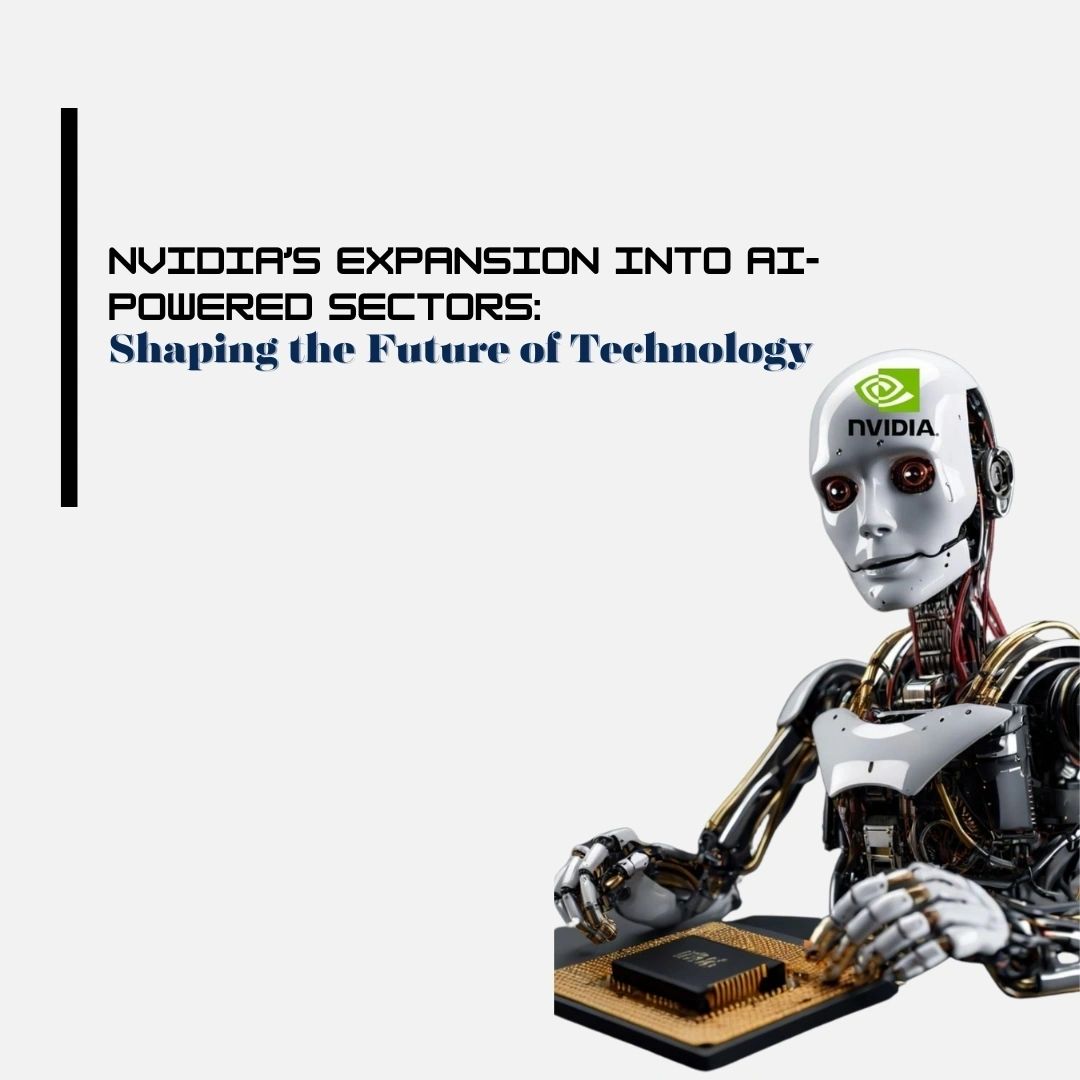
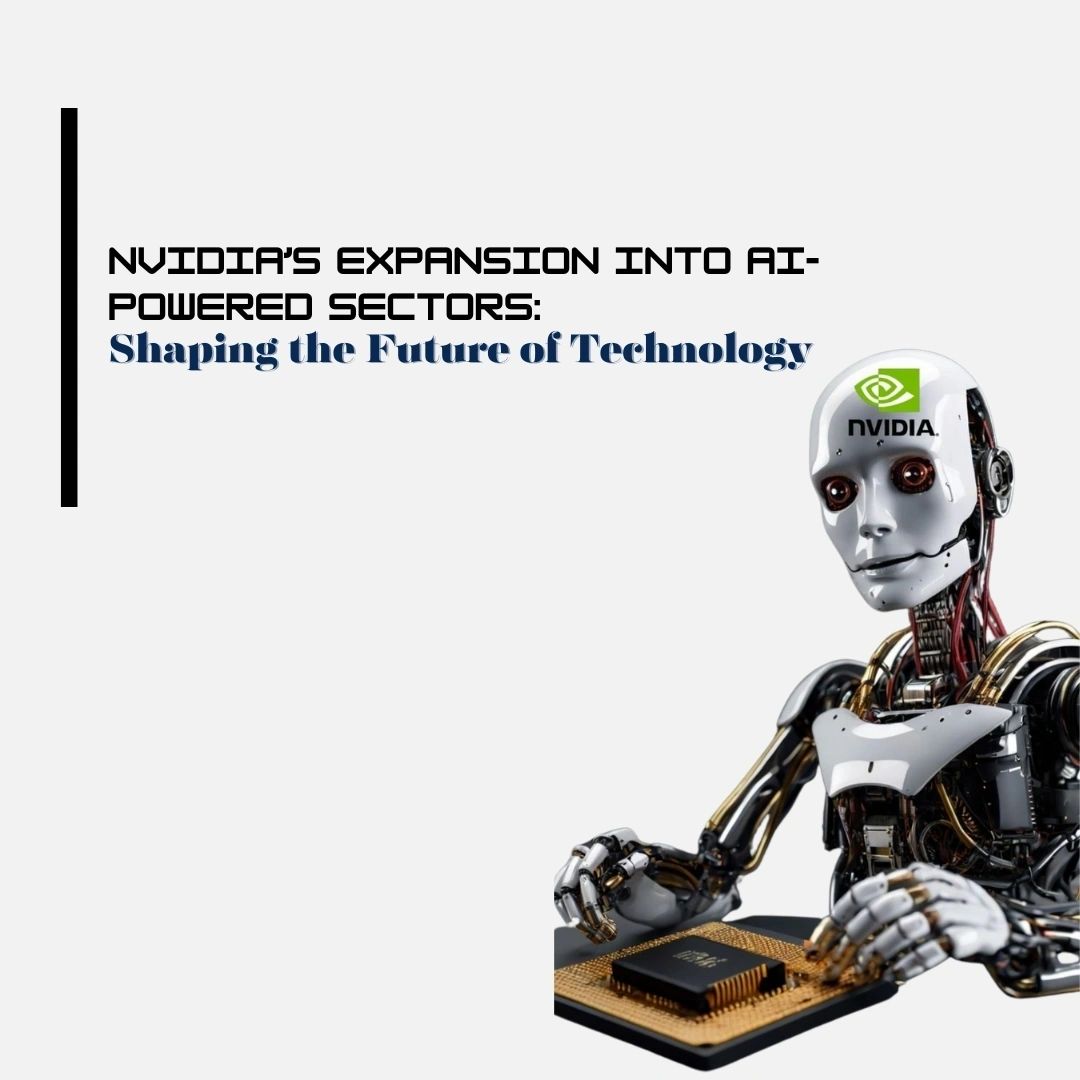
Nvidia, a global leader in graphics processing units (GPUs), has evolved far beyond its roots in gaming and computer graphics. In recent years, the company has aggressively expanded into artificial intelligence (AI)-powered sectors, becoming a driving force behind transformative technologies across industries. By leveraging its cutting-edge hardware and software solutions, Nvidia is not only shaping the AI landscape but also redefining its own role as a tech innovator.
Pioneering AI Hardware with GPUs

Nvidia’s GPUs have long been synonymous with high-performance computing, making them a natural fit for AI workloads. Unlike traditional central processing units (CPUs), GPUs are designed to handle parallel processing tasks, a critical requirement for training complex AI models. Nvidia’s CUDA platform and Tensor Core architecture further optimize GPU performance for AI applications, enabling faster and more efficient deep learning processes.
This hardware advantage has made Nvidia the go-to choice for companies developing AI-powered technologies in fields such as autonomous vehicles, healthcare, finance, and natural language processing (NLP).
AI in Autonomous Vehicles
One of Nvidia’s most ambitious ventures is in autonomous driving. The company’s DRIVE platform integrates AI, hardware, and software to create advanced solutions for self-driving cars. Nvidia’s DRIVE Orin and DRIVE Thor chips offer unmatched processing power, allowing vehicles to analyze real-time data from cameras, sensors, and radar.
Moreover, partnerships with automotive giants like Mercedes-Benz and Volvo have solidified Nvidia’s position as a leader in autonomous vehicle technology. These collaborations not only advance the development of safer and smarter cars but also position Nvidia at the forefront of an industry expected to revolutionize transportation.
Transforming Healthcare with AI
The healthcare sector has also been a major focus for Nvidia’s AI initiatives. The company’s Clara platform uses AI to improve medical imaging, drug discovery, and genomics. Clara enables faster and more accurate diagnoses by processing large volumes of medical data and generating actionable insights.
Nvidia’s contribution to healthcare during the COVID-19 pandemic is a testament to its capabilities. The company’s AI tools accelerated vaccine development by analyzing molecular structures and predicting protein interactions, showcasing how its technology can address global challenges.
Revolutionizing Enterprise and Cloud Computing
Nvidia’s AI-powered solutions are transforming enterprise and cloud computing. Its GPUs are now a cornerstone of data centers worldwide, enabling companies to process and analyze massive datasets efficiently. With the rise of generative AI and large language models like ChatGPT, the demand for Nvidia’s hardware has skyrocketed.
The launch of Nvidia’s Grace Hopper Superchip further highlights its commitment to AI-driven innovation. Designed for data-intensive workloads, the chip integrates GPU and CPU capabilities, making it an ideal solution for training and deploying advanced AI models.
Nvidia and the Metaverse
Nvidia’s expansion into the metaverse reflects its forward-thinking approach to AI-powered applications. The company’s Omniverse platform provides a collaborative environment for creating and simulating virtual worlds. Powered by AI, Omniverse enables developers to build realistic 3D simulations for industries ranging from gaming and entertainment to architecture and manufacturing.
This platform positions Nvidia as a critical player in the metaverse ecosystem, a space that promises to redefine how people interact with technology and each other.
Driving AI Research and Ecosystem Development
Beyond its commercial ventures, Nvidia is investing heavily in AI research and ecosystem development. The company has launched initiatives like the Nvidia Research Lab, which focuses on advancements in machine learning, robotics, and AI ethics.
Additionally, Nvidia’s AI ecosystem includes tools like TensorRT, Triton Inference Server, and the Nvidia AI Enterprise Suite. These resources empower developers and researchers to innovate across various domains, further solidifying Nvidia’s role as a catalyst for AI-driven progress.
While Nvidia’s expansion into AI-powered sectors is impressive, it is not without challenges. The company faces fierce competition from tech giants like AMD, Intel, and Google, all of which are developing their own AI hardware solutions. Regulatory scrutiny and geopolitical tensions also pose potential risks to Nvidia’s global operations.
With the AI market projected to reach $1.8 trillion by 2030, Nvidia’s early investments and strategic partnerships position it for sustained growth.
Nvidia’s expansion into AI-powered sectors is a testament to its vision and innovation. By leveraging its expertise in GPU technology, the company is driving advancements in autonomous vehicles, healthcare, enterprise computing, and the metaverse. As AI continues to reshape the world, Nvidia’s contributions will undoubtedly play a pivotal role in defining the future of technology.